Traffic Hell

FOUL SITE, FOUL TRAFFIC

The only online graphic of the intended WV705/US119 green school site and intersection can be found at slide 34 on the MPO/ENTRAN slide presentation online at the Monongalia Morgantown MPO website. This is currently the public’s best chance to preview potential road access to that school site. Unfortunately, the graphic shows an option that was not remotely discussed by WV DoH consultant Tom Creasey during the recent ENTRAN/DoH MPO presentation on that intersection. What’s going on?

At the MPO presentation, there was zero discussion of bisecting the armory with a through road, which the slide shows. Read the rest of this entry »

What An Illegal School Site Looks Like

UNLAWFUL CONGESTION, TRAFFIC, ARTERIAL HIGHWAYS, NOISE, BAR, AND POSSIBILITY OF ENTRAPMENT

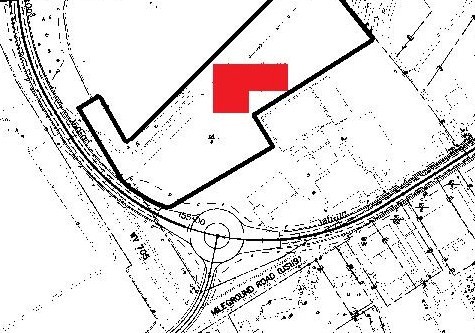
The intended approximate school property (still not purchased from WVU and not even up for WVU BoG vote to sell until November 12) is about 7 acres inside the black bold lines. The approximate school building is in red. Parking would be to the left, playgrounds to the right, and internal roundabout below (in front of the building). That’s right, a roundabout upon a roundabout just to get to the school. The site is so thin and crowded by the highways and by the intersection and by the sheer dropoff at back that there is nowhere else for vehicles to go.

WV 705 (at left) carried 23,000 vehicles per day in 2008. It is projected to carry 32,000 by 2030, in the 18th year of the intended school.

US 119 (at right and bottom) carries many thousands of vehicles per day additionally. The intersection congests at school hours morning and afternoon. The WV Division of Highways notes that even the impending road expansion (pictured above) to 4 or 5 lanes will not eliminate congestion. The expansion will increase traffic.

Because the entire long back edge of the school property is sheer dropoff and because there are no outlets away from WV 705 and US 119, the whole intersection area can congest and gridlock and lead to student entrapment. Read the rest of this entry »

911

ALL POINTS BULLETIN FOR MANCHIN, DEVONO, PARSONS

Per state code below, the green school site as approved by the West Virginia School Building Authority is clearly not legal.

It is uncontroversial that the intersection of WV 705 and US 119 – where the green school is intended to be sited (which WVU would sell land for), where the $8.6 million WV SBA grant was approved for in April – is a major nexus of “arterial highways, heavily traveled streets, traffic and congestion” carrying tens of thousands of vehicles per day. These facts automatically disqualify the location from becoming a school site, by law, per below. Read the rest of this entry »

Is The Green School Site Legal?

STATE POLICY SHOWS GREEN SCHOOL SITE TO BE ILLEGAL

WEST VIRGINIA CODE OF STATE RULES, TITLE 126 LEGISLATIVE RULE, BOARD OF EDUCATION, SERIES 172

HANDBOOK ON PLANNING SCHOOL FACILITIES (EDUCATION POLICY 6200)

202.06. For the safety of students, the site shall be located away from hazards and undesirable environments, such as:

a. Railroads, arterial highways, heavily traveled streets,traffic and congestion

b. Noise, toxic gas escapes from railroads, airports, and odoriferous plants or industries

c. Natural barriers limiting accessibility and expandability, such as rivers, lakes, swamps, and protruding ridges

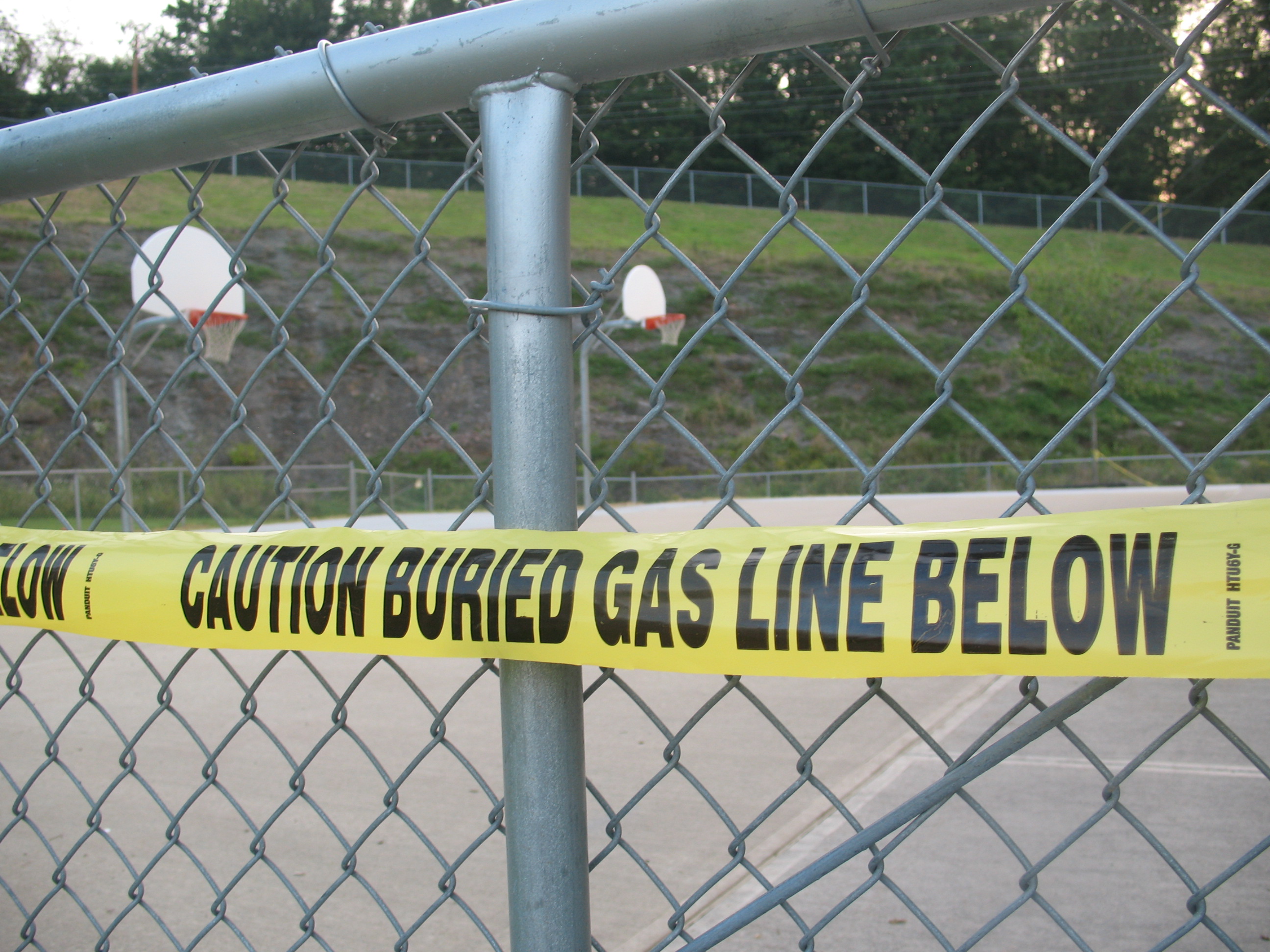
d. High voltage transmission lines, booster or reduction stations, high pressure gas lines, and transformer stations

e. Taverns, fire stations, bulk storage plants for flammable liquid, and property zoned as industrial

f. Situations where a combination of factors such as those presented above could contribute to the possibility of human entrapment Read the rest of this entry »

Where Is The Accountability?

WHERE IS THE ENFORCEMENT?

LIES, LIES, AND MORE LIES BY PUBLIC OFFICIALS VIOLATE THE STATUTES ITALICIZED BELOW, DO THEY NOT?:

WEST VIRGINIA CODE

CHAPTER 6, ARTICLE 9A “SUNSHINE LAW”

ARTICLE 9A. OPEN GOVERNMENTAL PROCEEDINGS.

§ 6-9A-1. DECLARATION OF LEGISLATIVE POLICY.

The Legislature hereby finds and declares that public agencies in this state exist for the singular purpose of representing citizens of this state in governmental affairs, and it is, therefore, in the best interests of the people of this state for the proceedings of public agencies to be conducted openly, with only a few clearly defined exceptions. The Legislature hereby further finds and declares that the citizens of this state do not yield their sovereignty to the governmental agencies that serve them. The people in delegating authority do not give their public servants the right to decide what is good for them to know and what is not good for them to know. The people insist on remaining informed so that they may retain control over the instruments of government created by them. Read the rest of this entry »

The Coming 705/Mileground Intersection Disaster

ALL OFFICIALS INVOLVED NEED TO CORRECT COURSE

At the ENTRAN/WV Division of Highways presentation about the route 705 and route 119 Mileground expansion at the MPO meeting in Morgantown Thursday, DoH official Perry Keller remarked that while green school traffic peak hours would coincide with commuter rush hour in the morning on the Mileground, which would be a problem, he said, he also claimed that school traffic peak hours in the afternoon would not coincide with rush hour. That is false. Completely wrong. “Rush hour” – that is, congestion nightmare – at the 705/119 intersection occurs from 2:30pm to 6:30pm, often earlier and sometimes later. Why? Because a 705 area hospital or two and Health Sciences have a huge shift change at 3:00pm (or 2:50). And Mylan Pharmaceutical plant has a huge shift change at 3:15. In other words, “rush hour” at the 705/119 Mileground intersection, the intended site of the green elementary school, begins much closer to 2:00pm than it does to the 5:00pm claimed by the DoH. And it can extend four times as long as the DoH claims. Not exactly a small mistake. The intended green school is doomed by countless factors. And it is doomed by rush hours alone. (UPDATE: Months later, DOH, MPO, and ENTRAN corrected themselves, no doubt due in large part to public outcry: the final ENTRAN study, Mileground Road Traffic: Final Report, published February 2011, found a) “rush hours” congestion about 6 hours per day (7-9 am, noon, and 2:30-6 pm) on the arterials engulfing the school site, b) nationally rated worst possible “levels of service” (congestion): “D” and “F” (“approaching gridlock”), and c) afternoon Mileground arterial traffic speeds dropping from 14.1 mph to 8.4 mph (average) and from 7.7 mph to 6.2 mph (rush hours) if the school is added to the Mileground, and average vehicular delay at the school-front arterial intersection doubling with the addition of the school, causing pollution, vehicle crash danger, and “entrapment” to be not only “possible,” or likely, but inevitable. This final ENTRAN study however mistakenly identifies WV 705 and US 119 (Mileground Road) as being “minor arterial highways” when in fact DOH confirms that in accordance with national standards those stretches of road are “principal arterial highways”. ENTRAN has said all along however that congestion there cannot be eliminated, only reduced, theoretically, and this would be a reduction of congestion that will not necessarily last as the widened roads and intersection draw ever more traffic in this ever growing traffic vortex and region.)

RUSH HOURS

It takes a worker at Mylan 45 to 50 minutes to travel 3 miles on 705 and 119 to her house in Woodburn on Charles Avenue. By far the biggest problem, she notes, comes at the 705/119 intersection as she tries to turn right/south onto 119. Traffic is backed up onto 705 all the way from Hampton Avenue as it enters 119 across traffic (just before Charles Avenue). It is a half mile of gridlock. And apparently ENTRAN and the DoH have no plans to do anything to solve or even alleviate the Hampton Avenue backup on 119 into 705, which can exist from 2:00 to 6:00. Sometimes she says she can go through relatively quickly for whatever reason. Other times she sits forever. Imagine school buses trying to go back to Woodburn and Jerome Park (or anywhere) moving into that 705/119 Mileground intersection (if they can). How? Perry Keller is making an honest mistake, but it is a big one. Huge. Rush hours at 705 and 119 begins about 3 hours before the DoH is aware. Little children would be sitting in exhaust fumes. It’s criminal.

The DoH and ENTRAN need to get their analysis corrected, pronto.

In fact, given the stunning magnitude of that basic error, they should go camp out on the Mileground, and route 705, and on all access and egress points for about two weeks to make sure they actually get a real sense of what is going on along the Mileground and all around it.

Read the rest of this entry »

The Mean, The Green, and The Phony

MEAN NOT GREEN

Mon Schools’ intended so-called green school would destroy a seven acre farm field to build a large sprawling facility, instead of redeveloping the existing Woodburn schoolgrounds.

‎”[Redeveloping] Any previously disturbed urban site is much greener than taking a greenfield site out of someplace.” – Richard Cook, architect

And so it is that Mon Schools’ intended green school is basically a phony green school. It is as phony and negligent as the rest of the school siting process has been and continues to be.

“The crown jewel of sustainable buildings in West Virginia” that Dr. Mark Manchin SBA Director and green school grantor wants “people from all over to see [as] one of the best green schools in the US” would be based on the lie of a green site.

By reasonable estimate, the 705/119 intersection site is also by far the most expensive location available. Thus Mon Schools’ mean attitude toward greenery extends to money as well. Why does the school district act like it hates farmland and money? Why does it act like it loves pollution and congestion and high traffic for its smallest children Pre-K to 5th grade?

Read the rest of this entry »

“it shall not proceed”

GREEN SCHOOL PROJECT HITS ROADBLOCK

Today the Monongalia County Schools green school grant project enters the “Schematic Design” phase – Phase 2 of the 6 contractually required phases in the Project Development Schedule for building the green school. By contract the green school project is now to move forward with schematic design. In reality nothing can be done. Mon Schools has failed to meet the contractual conditions for going forward.

Read the rest of this entry »

Bleeding Green

NEGLIGENCE AT DANGEROUS INTERSECTION

Who does not want a cutting edge green school or two or more in Morgantown and Monongalia County? But how about a bleeding green school instead?

The August 15th Dominion Post article on Dangerous Intersections shows that the intended site for the green elementary school is the 6th most dangerous intersection in the area, just up the road from the 5th most dangerous intersection where Superintendent Devono originally wanted to site the school.

And the intended school site is on the same road (route 705) as 5 of the top 6 most dangerous intersections in all Morgantown and surrounds.

No other public school, let alone a large elementary, is situated at one of the most dangerous intersections in the area. No other public school is even on the same road as 5 of the 6 most dangerous intersections (although North Elementary is not very far off).

Even though North Elementary school students and parents are apparently far and away exposed to the greatest number of dangerous intersections on their way to and from school, all along 705, putting a North overflow (green) school at the proposed site (705/119 intersection) would only make that situation worse by adding in the 5th and 6th most dangerous intersections to a school route that is also badly polluted and notoriously congested.

Read the rest of this entry »

Mon BOE: We’ve Got Money To Burn!

Before We Throw All The Rest In A Hole!

WVU: We Will Gladly Assist.

WILDLY DIFFERENT SITE APPRAISALS

Value of the high traffic 7 acre intersection site for the green school?

Appraiser hired by Monongalia County Schools: $70,000/acre = $490,000.

Appraiser for WVU: $325,000/acre = $2,275,000.

A difference of 78 percent or: $1,785,000.

Price Monogalia County Schools taxpayers will pay?: $2,275,000.

PLUS: an estimated $650,000 for mine mitigation.

And much more if the whole thing in the future subsides regardless.

[UPDATE: Instead of 7 acres, Mon Schools purchased about 11 and a half acres at the top rate noted above and reportedly incurred an additional $400,000 mine mitigation expense under part of the additional acreage, in addition to the $600,000 amount noted above. In other words, the Eastwood Mileground site purchase and mine mitigation alone cost about $4.7 million – as far as is known. A few years ago, neighboring Taylor County built a 300 student capacity elementary school for $6.6 million. The 450 student capacity Eastwood Elementary project is on track to cost more than $20 million, due in large part to the scandalously costly nature of the site chosen by Mon BOE. ]

Read the rest of this entry »

The Multi-Million Dollar Green Dream

INADEQUATE PLANNING & NARROW VISION

Yesterday at the green school kickoff meeting at the Waterfront, Dr. Manchin of the School Building Authority laid out a challenge: to make Monongalia County’s new green elementary school

“the crown jewel of sustainable buildings in West Virginia.”

Dr. Manchin wants

“people from all over to see one of the best green schools in the US.”

So it was disturbing to hear no talk of greenhouses and solariums. As many people are aware, even some non-green schools have greenhouses. Unfortunately these are often neglected due to lack of expertise. Greenhouse ventilation can be tricky, so possibly an extensive double-or-triple-room sized solarium should be attached to the side of the school, talking advantage of the school’s ventilation system, however modified. Can a green school truly call itself green without an active growing space? Where better to study life sciences, and even do plenty of related work in math and reading and social studies classes…. Such a space can be partly built into the ground to help thermally regulate it.

The outdoors area of the proposed school site at the 705/119 intersection on the Mileground is, frankly, irredeemably polluted and lousy, so the outside would have to be massively made up for on the inside. If one large living solarium is too much to handle, possibly numerous pod-like solariums could substitute, or several substantial living green pads. Read the rest of this entry »

Statistics and Lies

OVERCAPACITY OPERATION: THE STATS & THE…DISCREPANCIES…

The problem with North is the problem with Suncrest. Over capacity. Both Suncrest Elementary and North Elementary apparently both operated last school year in violation of facility enrollment capacity. This raises questions of legality, educational integrity, fire hazards, general administrative competence, and much else. Why the crowding? Why the overcrowding?

Well: where else are the students going to go? Mon Schools has dropped from 15 elementary schools in 2005 to 11 today, and a planned 10 by 2012. (In 1998, Monongalia County had 19 or 20 elementary schools. Since then, enrollment has climbed while the number of schools has been cut to 15 by  2005,  to 11 by 2010, to be 10 by 2012.) With Pre-K being newly required to be offered by the public schools to any parent who desires it, this puts added pressure upon the entire school district, especially to send current and future Suncrest and North area students elsewhere. Where do these students go for the next two years?

Suncrest Elementary, a pre-K through 3rd grade school, with a capacity of 230 students, had an enrollment of 257 this past year, according to the WV BOE. That’s 12% over capacity. Nearby North Elementary, a pre-K through 5th grade school, with a capacity of 702 students, had an enrollment of 703, according to the WV BOE – technically over capacity. (Mon Schools lists facility capacity in its 2010 CEFP Executive Summary, page 4.) Where will graduating Suncrest students go for 4th grade, since nearby North is already over capacity? Where will additional North area students go, since it too has surpassed capacity? Read the rest of this entry »

The Fate of Skyview Elementary

ADJACENT INDUSTRIAL PARK AND SCHOOL EVACUATION

Read the rest of this entry »

The Public Should Know

HOW THE OFFICIALS WOULD ENDANGER THE PUBLIC

So that the public can be more involved in shaping these decisions and public matters.

Here is some of what the public should know is going on in regard to the 705 Connector/Mileground road expansion project. As partly shown below, the government agencies tend to prefer building a four-lane 705 Connector/Mileground highway with 3 roundabouts, a grass median, and no left turns (no dicey cross-traffic). This seems to be the overall safest, least polluting, most aesthetic, and best traffic flow option.

Meanwhile in special meetings some area businesses have tended to push for a smaller, uglier median, and/or dangerous left turning lanes, and/or the more polluting and more congesting and more dangerous traffic light intersections.

Where are the special meetings for the parents of the proposed green school, as well as for the general public? Read the rest of this entry »

Do They Even Know What They Are Rubber Stamping?

THE WILLFULLY IGNORANT & INCORRIGIBLE SCHOOL BOARD & SUPERINTENDENT

Or is the School Board going along with deceit? Does the Board not care?

WVU Director of Real Estate Services Shannon Mundell to WVU Vice President Narvel Weese:

“Confidentially, the overflow from North [elementary] and [the entire student body of] Woodburn elementary will be placed in this [new green] school.”

WV Department of Highways official Richard Warner to Metropolitan Planning Organization Director Bill Austin:

“Just listened to a replay of you and [David] Bruffy [General Manager, Mountain Line Transit Authority]…. Very nice jobs, both of you. Nice dance you did around Kay’s question about the traffic effects of the new school on the Mileground.” Austin’s reply: “Thanks, I learned to waltz from the best.”

Monongalia County School Board President Barbara Parsons:

“…personally resent[s] accusations that we, The Mon County Board of Education, manipulate and mislead the public.”

Then hold your superintendent and others accountable, President Parsons, and work to reverse the Board’s deplorable decisions in this matter. Or do the appropriate thing and resign.

Not clear? See this clarification we followed up with:

Monongalia County Schools states on the SBA green school grant compliance checklist “Compliance With SBA Requirements Proposed New Project” under the section “Adequate Space For Projected Student Enrollment”:

“There is adequate space for enrollment projections. Once this facility [green school] is completed [Fall 2012], redistricting will occur in the North [Elementary] and Cheat Lake Elementary areas due to overcrowding.”

Publicly, the Monongalia County Board of Education has been denying such redistricting plans. Board President Barbara Parsons denied it again in a July email:

“As a Board, we have had no discussion, whatsoever, regarding any changes to North Elementary attendance area and the new school. I can see how it might appear to be a logical consideration, but the Board is extremely sensitive to any issue involving redistricting because we had these discussions prior to building a new University High School. At that time we said there would be no redistricting and we have vigorously maintained that position. … Any future consideration of redistricting will be at the initiative of the public.”

Once more with emphasis:

…no redistricting and we have vigorously maintained that position … no discussion, whatsoever, regarding any changes to North Elementary attendance area and the new school. …we said there would be no redistricting and we have vigorously maintained that position. … Any future consideration of redistricting will be at the initiative of the public.

President Parsons, you might want to pick up Mon Schools’ green school grant compliance checklist:

“Once this facility [green school] is completed [Fall 2012], redistricting will occur in the North and Cheat Lake Elementary areas due to overcrowding.”

In other words, the idea in the green school grant proposal is that North Elementary overflow students will go down route 705 to the new school when the green “facility is completed” just as the FOIAed emails outright state and otherwise indicate:

“Confidentially, the overflow from North will be placed in this [green] school.” [Mundell to Weese.] Devono “was originally looking [to build the green school] at the area” far down 705, directly toward North.

That, folks, is redistricting. It is redistricting with a thump, with a real “see ya later” wave to Woodburn area and Easton area. “See ya…. Wouldn’t want to be ya….”

What is kept from public eyes and ears is entirely consistent. And it completely contradicts what is stated to the public by the Board, the Board President, and by Superintendent Devono himself. In a July email to a questioning member of the public, Devono states:

“I am not recommending any attendance area from North being included into the new [green] school.”

Oh, really? And how again does that square with the grant compliance statement? and the FOIAed emails from WVU? and the Superintendent’s original preferred site rather near North (which has never once been publicly acknowledged)?

“Once this facility [green school] is completed [Fall 2012], redistricting will occur in the North and Cheat Lake Elementary areas due to overcrowding.”

“…we said there would be no redistricting and we have vigorously maintained that position. … Any future consideration of redistricting will be at the initiative of the public.

Why is the Mon Schools administration operating underground? …

WVU: Like a Thief in the Night

“DETERMINING A SITE FOR THEM”

WVU is trying to steal the green school, profit off it, and put it where it wants it.

Too harsh? Well, let’s take a look.

WVU is a key mover in allowing the green school to not be placed in the well-situated neighborhoods of Woodburn or Jerome Park. After all, WVU is acting to allow the school to be sited, for a big chunk of change, on and along its lands, somewhat in the area of where the Mon Schools’ administration has been pushing to site the school for a very long time. Read the rest of this entry »

Let’s Play in Traffic, Kids!

THE GREEN SCHOOL AS TIME BOMB

English reporter Claud Cockburn liked to say, “Never believe anything until it has been officially denied.” As Australian reporter John Pilger puts it, “If it is officially denied, then it’s probably true.” On Tuesday, June 29, at the Monongalia County Board of Education meeting, Board President Nancy Walker (via phone) read a prepared statement denying outside influence in the school siting process (presumably by real estate developers, WVU, and others). Then the next day, June 30, in the Charleston Daily Mail, reporter Ry Rivard quotes WV School Building Authority Director Mark Manchin stating: “I want to make it very, very clear, those decisions [regarding school location] are made at the local level; by the time it gets to us, the authority wants these things resolved.” One must follow the law, after all. Read the rest of this entry »

WVU in League with 705 Area Developers?

WVU DUMPS ON THE PUBLIC FOR BIG BUCKS

Who would benefit from a showcase green school at the 705/Mileground intersection?:

  • WVU and the College of Agriculture: selling 7 or 8 acres for about $2.3-2.6 million dollars would allow the Ag College to add a couple faculty lines.
  • Route 705 developers: tightly connected to the Garrison/Walker administration and others, 705 area developers and related interests (banks, etc.) would stand to gain on investments and in property value by seeing a showcase green school situated at the gateway to 705 on the Mileground.

Who would a 705/Mileground intersection school negatively affect?” Read the rest of this entry »

No To A 705/Mileground Intersection School

Elementary School Size in Monongalia County, 2005-2012

(See also: Let’s Play in Traffic, Kids! and Warning! Hazard! an21-25 Million Dollars And No Sense)

UPDATE: At the 705/119 Mileground intersection site, Mon Schools bought 8.85 acres from WVU for about $2.9 million, then bought an additional adjacent 2.5 acres from the Mileground Mobile Home Park for about $800,000, then spent about $1 million to mitigate the mine voids that underlie both properties, anywhere from a dozen to a few dozen feet below the surface. That’s nearly $5 million spent on land acquisition and mine mitigation, none of which would have been spent if a new school had been rebuilt on the existing Woodburn schoolgrounds. West Taylor Elementary was built a few years ago by Mon School’s architects for $6.6 million. West Taylor’s capacity is 300 students, nearly 100 more students than attend Woodburn Elementary, and only about 70 fewer student than attended Woodburn and Easton Elementaries combined, last year. The consolidated Eastwood Elementary on the Mileground is projected to cost $21 million or more, in a colossal mismanagement and waste of funds, at an illicit and potentially lethal site. $6.6 million versus $21 million – what’s wrong with this picture? The school district could sell that land and switch to a safer, better site and save money. And it should.

The Mileground school site is undermined a few dozen feet below ground, mines that receive direct the sewage from the trailer park to be purchased for the site, a trailer park with polluted surface land as well that lost its county health license a few years ago. (The back acres of the school grounds at the level of the mine portals and sewage dump are to hold a bio-retention pond, for nature study! as well as possibly a nature trail.) As of March 2011, the school district has not tested the soil within the trailer park, despite the sewage dump, despite a suspected old septic drainage field, despite a plethora of solid waste, despite the intended play field for the grade school children.

The school site borders principal arterial highways and their intersection, so it is vehicle-exhaust polluted and noise polluted, and traffic crash dangerous, one of the most dangerous intersections in the entire region according to study. The arterial highways are worst level congested and thus slated for an expansion to four lanes, divided, in 2014/2015 by DOH, a $40,000,000 project to be constructed one or two years after the pre-K thru 5th grade school would open – placing the arterial highways’ intersection a mere football field length, if that, from the front doors of the school, and essentially in the school site itself. In fact, part of the school site would need be surrendered to the WV Division of Highways for the impending highway expansion and shift to and upon the school grounds. The highway expansion cannot eliminate the traffic congestion, note the highway project consultants, who further project an increase in traffic by at least 50 percent in the first couple decades of the new school. The school is a $21,000,000, 545 seat, dangerous boondoggle of a project, partially funded by the WV School Building Authority, and is, as we allege, variously unlawful. A major gas station has expressed strong interest in siting next to the intended school, the icing on the cake of the negligent school siting at this congested, polluted, expensive (~$325,000.00 per acre for 11.5 acres), and all around dangerous commuter and commercial intersection.

Does a new school at the Mileground intersection not potentially threaten Suncrest Elementary with closing? And does it not likely mean that Easton area students will sooner or later windup in an expanded Mileground school the size of Cheat Lake Elementary, or larger?

The viable alternative is to build a new combined school at the Woodburn site for both Woodburn and Easton students, which would have the good benefit of disallowing any such future expansion, due to site constraints.  Even so, a combined Woodburn-Easton school on revitalized Woodburn grounds would already be double the size of the current Woodburn student body, and even moreso than the current Easton student body. However, the fortuitous Woodburn site constraints would prevent futher expansion.
This would not be the case with a Mileground intersection school. A new combined school there could expand greatly, and the stark recent trends of the Monongalia County School District show that the Mileground school would very likely expand. In other words, Easton area parents and students who wish to avoid attending a very large school, whether at Cheat Lake Elementary or North Elementary or the likely to expand proposed Mileground school, would find a relatively small school only at a revitalized Woodburn site, probably nowhere else.

Since the proposed Mileground school may likely rapidly expand, and because it is an echo chamber of constant speeding traffic, and because the intersection area is polluted and congested, and because it is a commercial sprawl school, and because it is no closer and in the future likely no smaller than Cheat Lake Elementary, why would Easton and Cheat Lake students and parents prefer that large and poorly sited school to, either, attending Cheat Lake Elementary with its much more hospitable site, or, traveling a single extra mile to the green and quiet neighborhood of Woodburn? The Woodburn site is fully accommodating for a combined school with Easton, and its pocketed residential location forces the school size to remain relatively small, unlike the Mileground site.

An expanded school at the Mileground intersection would allow the possibility of closing Suncrest Elementary because Suncrest students could be simply moved to nearby North Elementary, many of whose students could go to the Mileground School. For this and other reasons, it would benefit Suncrest school supporters to support the Easton and Woodburn schools combining at a revitalized Woodburn site rather than the Mileground intersection site.

Data compiled from the Monongalia County School District web pages show that in the past 5 years (2005-2010) the number of elementary schools has shrunk from 15 to 11, and the average elementary student body size has increased by 55 percent. During those same five years, the total elementary student body has increased 13 percent, per the information available online, as listed below.

It’s time for the school district to start building additional schools, or at least holding the line, rather than continuing to reduce the number of elementary schools, for many reasons, including current crowding, the well-established many benefits of neighborhood schools and small schools, public preference, and so on. The financial capacity to do so seems to exist as well. Moreover, it needs to exist.

All else the same, consolidating Woodburn and Easton would drop the number of elementary schools from 15 to 10 in the seven year period of 2005-2012, for an average increase in elementary school student body size of 70 percent, in seven years, district-wide. Ten elementary schools would be down from 20 elementary schools in 1998. When and where does it stop? Such consolidation has occurred not only in Monongalia County but statewide under the force of the West Virginia School Building Authority, since its founding in 1989.

For controlling runaway student body size in the elementary schools in Monongalia County, there seems to be only one way left: force schools to be built where they can be fully accommodated but not expanded. Suncrest, Easton, and Woodburn school parents and communities should insist that the Easton/Woodburn consolidation occur on the accommodating, and containing, revitalized Woodburn site. See the incredible stats on consolidation and expansion below.

Building a school at the Mileground intersection with 705 destroys Woodburn, uses Easton, and threatens Suncrest.

Monongalia County Elementary School Enrollment,2005 & 2010:

SCHOOL ENROLLMENT
2005 – 2010
% CHANGE
Arnettsville Elementary 89   –  cons closed
Brookhaven Elementary 438   – 454 4% incr
Cass Elementary 227   –  cons closed
Cheat Lake Elementary 570   – 644 13% incr
Daybrook Elementary 79   –  cons closed
Easton Elementary 111   – 176 63% incr: to be closed
Mason Dixon Elementary 351   – 344 2% decr
Mountainview Elementary 629   – 758 21% incr
Mylan Park Elementary n/a   – 491 new
North Elementary 619   – 700 14% incr
Ridgedale Elementary 285   – 403 41% incr
Riverside Elementary 197   –  cons closed
Skyview Elementary n/a   – 452 new
Suncrest Primary 164   – 257 57% incr
Waitman Barbe Elementary 88   –  cons closed
Westover Elementary 267   –  cons closed
Woodburn Elementary 210 –  227 8% incr: to be closed
total 4324  – 4906 13% incr
average student body size for the 15 schools in 2005 and the 11 schools in 2010 288  – 446 55% incr/5yrs
average given Woodburn-Easton consolidation by 2012 [all other data unchanged] 288  – 491 70% incr/7yrs
average for the Morgantown area [minus Mason Dixon and Daybrook Elementaries] 2005-2010 300  – 456 52% incr/5yrs
average for the Morgantown area [minus Mason Dixon & Daybrook Elementaries] 2005-2012 300  – 507 69% incr/7yrs

Enrollment figures compiled from Monongolia County Schools website: http://boe.mono.k12. wv.us/

NOTE: Woodburn Elementary’s enrollment numbers above include 20 children who attend pre-school care off campus and who are planned to continue do so after a new school is built.

State law requires that the public schools pay for a certain number of pre-school students at off-campus sites so as not to destroy the pre-school centers that existed prior to the recent passage of state law requiring all public schools for provide pre-school care.
New Woodburn Community School Initiative

GOOD PLACE, GOOD PLAN

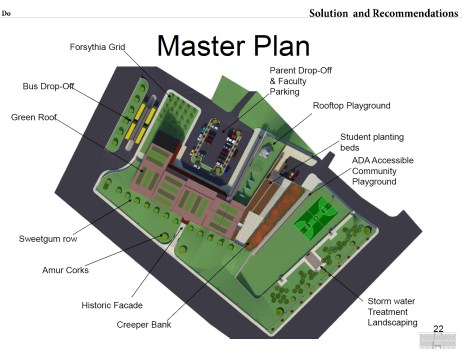
For a combined Easton/Woodburn elementary school on Woodburn schoolgrounds, slightly expanded

*

The concept for a combined Easton-Woodburn Community School in Woodburn is fundamentally green and sustainable with financial and environmental, social and educational advantages.

see also many pages of supporting documents at The Case for the Woodburn Site

ADVANTAGES OF THE WOODBURN PLAN

Economic Advantages

    • The Woodburn property is already owned by the school district; no multimillion dollar land acquisition needed, a responsible use of taxpayers’ money
    • The land is not undermined, unlike the Mileground site; no mine-fill expense at Woodburn
    • Other financial benefits include pre-existing municipal overflow parking and minimal school drive construction costs
    • The site allows for responsible and gradual growth but prohibits hasty expansion and limits future expensive capital projects
    • The facility would be energy efficient for reduced operating costs
    • Utility infrastructure is in place
    • Neighborhood schools attract and retain residents in keeping with the city’s revitalization and stabilization efforts
    • The site presents a variety of pathways to LEED certification
    • Engaged community members are willing to volunteer expertise and labor
    • Potential exists for national visibility of a highly creative green and sustainable project

Environmental Advantages

    • Reuse of a current site as opposed to the development of farm land
    • Opportunity to salvage and reuse materials
    • Smaller building footprint
    • Opportunities for natural storm water management
    • Reduced lighting energy use due to extensive natural daylighting
    • Water efficient landscaping and fixtures throughout
    • Reduced dependence on automobile usage (a key LEED criteria)
    • Pedestrian access

Social and Educational Advantages

    • The school is the anchor of a long-term residential community
    • Small neighborhood schools improve educational outcomes, offer a vital support network for students, and enable greater parental involvement
    • The location is more conducive to after-hours use than the Mileground site
    • Children feel connected to the school; it is integrated into community
    • Neighborhood schools help strengthen existing communities rather than promoting sprawl. In a letter to the Mon County Board of Education, Mayor Bill Byrne expressed his support for these schools, which “encourage re-development, neighborhood stabilization, and positive community impacts.”
    • The site is quiet, accommodating, well-sized for 450 students
    • The concept flows with the landscape rather than dominating it
    • The well-integrated site is uniquely situated between downtown and the surrounds
    • The site is linked by sidewalks to the outside classrooms of Deckers Creek Trail, Whitmore Park, and Marilla Park
    • It will reduce lifecycle costs (overall costs associated with the project during its lifetime) by its location in a downtown neighborhood—a core concept of the Council for Educational Facility Planners International.

*

POSSIBLE CONCERNS

How difficult would it be to drop my child off at Woodburn?

Some Easton and Cheat Lake area parents are reasonably concerned about traveling by car to the Woodburn school site to pick-up or drop-off their children, but the Woodburn school grounds can be quickly reached by a short route. Rather than sit in traffic, follow the simple “Mileground Bypass.” From 119 at the airport, take Hartman Run Road (857) to Richwood Avenue, along which the school is located. This little loop around the Mileground chops minutes off the drive time when the Mileground is congested, or under construction, or both.

Will there be a lot of car and bus congestion?

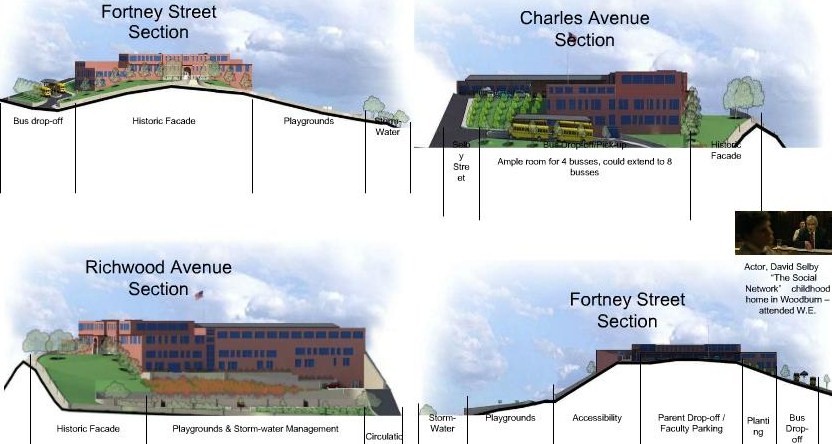
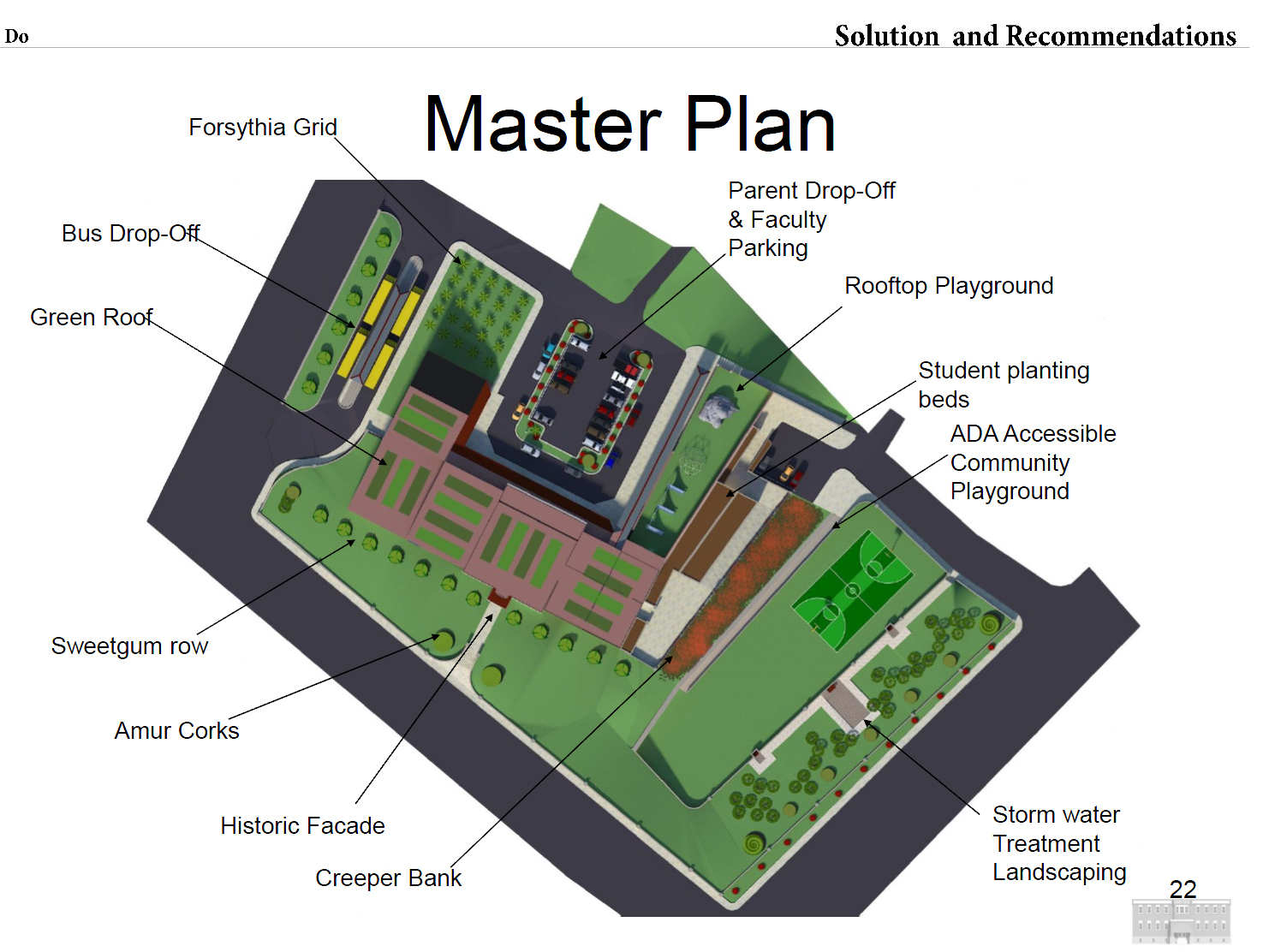
Currently, cars line up on Fortney Street for pick-up, but the new design provides a sizeable pullout area for cars, separate from the area for buses.

Where will the Woodburn school children be during construction?

Phased construction of the new school on the grounds and slope below the school will allow the old school to remain open until the new school is completed.

Other Concerns?

See the information and contacts at newwoodburncommunityschool.org/

*

ACCESSIBLE, ACCOMMODATING, AND SIZEABLE

Woodburn schoolgrounds sits on two public bus routes and can be reached by car and school bus from all directions (map):

1.  Hartman Run Road (which is 857) / Richwood Avenue East (from Easton & Cheat Lake area)

2.  Willey Street / Richwood Avenue West (from downtown Morgantown)

3.  Mileground road (US 119) / Charles Avenue (from Mileground & 705 area)

4.  Route 7 / Mineral Avenue / Richwood Avenue East (from Sabraton, South Park & Green Bag road area)

A combined Easton/Woodburn school on Woodburn schoolgrounds is the only way to keep the new school even relatively small: around 400 students, or 450.

Siting the school on the Mileground would allow it to be readily expanded to 500, 600, 800 and more students. The school district has been rapidly expanding school after school (whether it consolidates or not). In the past 5 years, elementary student body size has increased on average 55 percent in Mon County. Only the Woodburn site for the new school can discourage such rash expansion that the school district continues to push for.

When Easton and Woodburn are combined that will make it an average 70 percent increase in student body size in 7 years, as the number of elementary schools will have dropped from 15 to 10. Currently there are 11 schools. See the facts and the trends, if you haven’t already: Elementary School Size in Monongalia County, 2005-2012.

To keep the new school reasonably sized, we do best to site at Woodburn. The innovative design allows for a unique, exciting, and great school and school grounds, slightly expanded from the existing school grounds by the adjacent land of willing sellers only.

Siting the school at the Mileground, apart from the financial waste and many other drawbacks is an invitation to the school district to grow that school to the size of Cheat Lake Elementary and North Elementary or even larger. The accommodating Woodburn site is surrounded by houses and two communities, thankfully, that will strongly discourage the school district from its penchant for expansion and its ability to do so over the objections of parents.

*

How To Build a Green School

The concept for a new Woodburn community school was developed according to the guidelines found in the West Virginia Series 172 Handbook on Facilities Planning, commonly referred to as Policy 6200.   This 256-page document spells out both the guidelines and requirements for all West Virginia school facilities.  It is a public document found on the West Virginia State Department of Education website.  It is used by all design firms when creating what is called the ‘program’ for a school.  The program indicates how the facility will be used–what physical space needs must be met in the design.

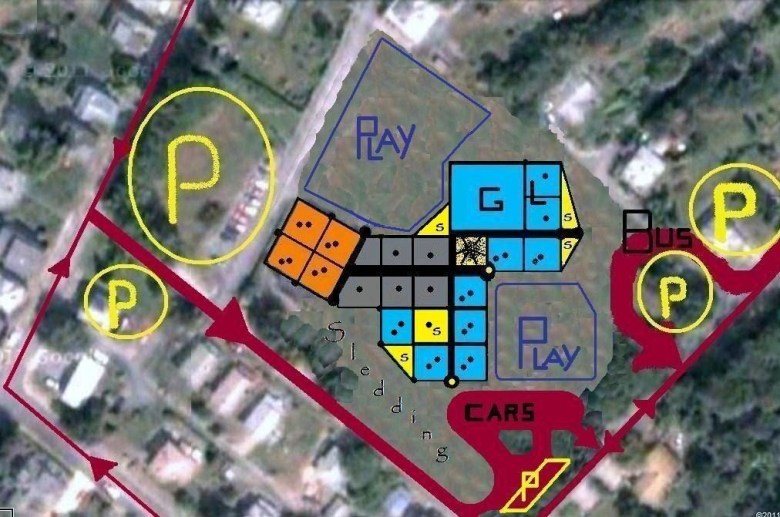
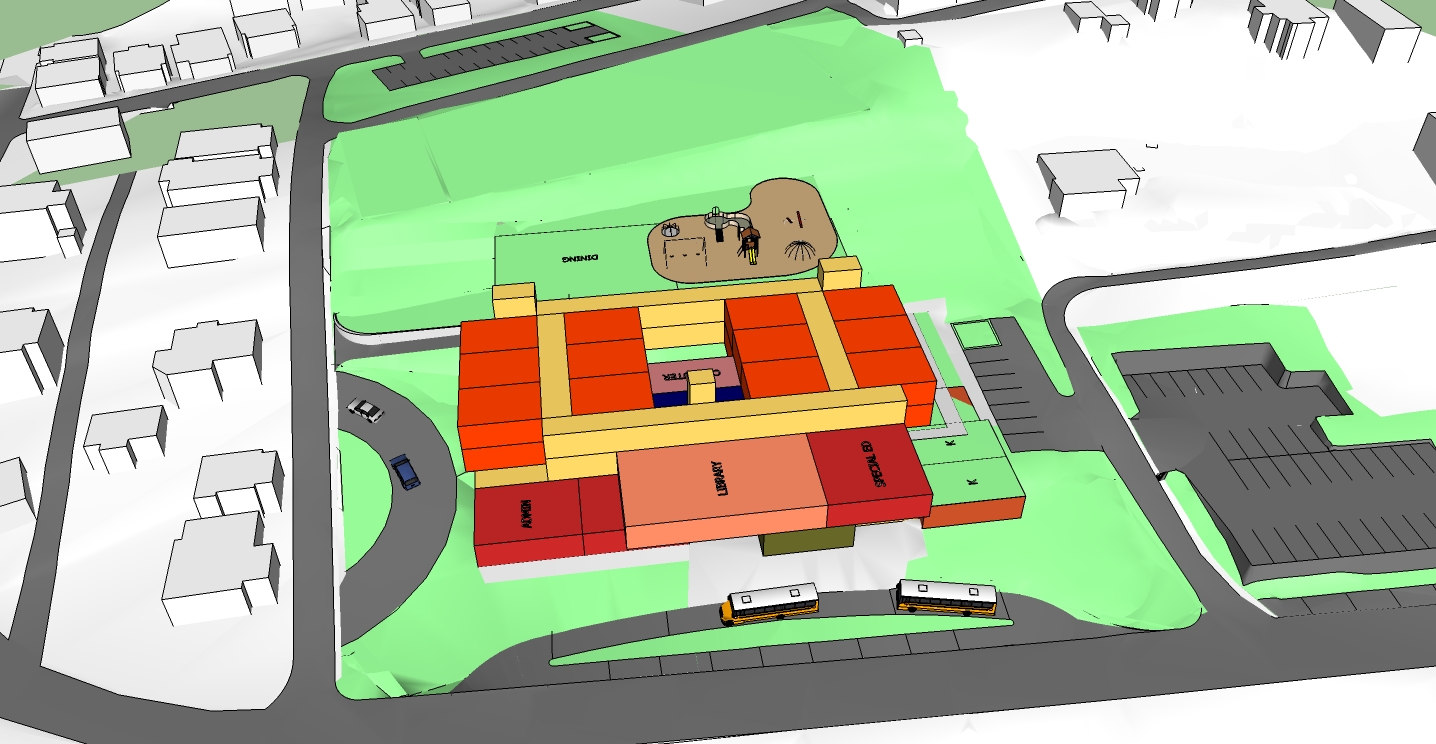
Using Policy 6200, we arrived at a total square footage for a 450-student elementary school building of roughly 52,000 square feet.  The 450-student number comes from our Monongalia County Board of Education.   As required by Policy 6200, Pre-K, K, 1 and administration are located on what would be considered the ground floor by the WV State Fire Marshall, the authority having jurisdiction over all new educational facilities in West Virginia.  The total school program also includes exterior spaces such as parking, bus/ parent drop off areas and recreation areas and our concept has taken all of these into consideration and complies with the necessary exterior space requirements and guidelines.

Our concept sits on the current 4 acres owned by the Monongalia County Board of Education.  Policy 6200 recommends 7 acres for a school of this size, but does allow for smaller sites under Section 203.4, stating, “When the nature of the school is urban, the school site shall also be urban in scale.”  In order to satisfy the requirements for a waiver from the typical site acreage, a project must indicate that it can meet all program requirements on the smaller site.  Our concept does that nicely.  According to Dr. Mark Manchin of the WV School Building Authority, several school projects in West Virginia have received site acreage waivers.

Our concept calls for the potential acquisition of two parcels from sellers who have indicated their willingness to sell at appraised value should the Board of Education wish to purchase their land for a new school on the Woodburn site.

The LEED Rating System has been called into play and our concept would focus on several key components of this system:  site reuse, community connectivity, walkability, alternative transportation options nearby, light pollution reduction, maximizing open space, reduction in heat island, natural storm water management (quality and quantity), avoidance of sensitive sites (such as farmland, park land, flood plains, endangered species habitat), materials reuse, water efficiency, energy efficiency, indoor air quality.  While no concept can say it will definitely meet final LEED Certification, our concept has great potential to obtain the LEED Silver threshold in a variety of ways.

Our concept is not intended to be a final design, but to merely show how the required program could be met on a site that is already owned by the Board of Education.  A site that is also not undermined and comprises the core of a long-standing Morgantown neighborhood.

OTHER IDEAS:

MATERIALS IN SUPPORT OF A REVITALIZED WOODBURN SITE

HUGE SUPPORT FOR WOODBURN SITE

PDF materials gathered and prepared by Katy Ryan, and others.

SEE THE 71 PAGE PDF:
Materials in Support of a Revitalized Woodburn Site

Excerpts from the PDF:

MATERIALS IN SUPPORT OF A REVITALIZED WOODBURN SITE

June 15, 2010

Prepared by the Woodburn Community School Initiative

https://newwoodburncommunityschool.org/

Submitted to the Monongalia County Board of Education, Superintendent Frank Devono, the West Virginia Board of Education, Director of the School Building Authority Mark Manchin, and WVU President James Clements

____________________________________


TABLE OF CONTENTS


I. Summary

II. Letters to the Board of Education and Open Letters

A. Letter to BOE President from Morgantown City Council

B. Letter to Monongalia County Board of Education from Susan Eason, Tom Shamberger, Chris Haddox

C. Letter to School Building Authority: “No School on the Mileground” from Susan Eason

D. “Against Consolidation” and “Notes on the Expansion of 705 & the Mileground” by Tony Christini

E. “Preserve the Neighborhood School” by Jennifer Wilson

F. Letter to WVU President James Clements from Tony Christini and Katy Ryan

G. Letter to BOE from Thomas Shamberger

H. Open Letter from Linda Wessels

III. Comments Delivered at the CEFP Hearing on May 17, 2010

A. Katy Ryan

B. Thomas Shamberger

C. Susan Eason

D. Chris Haddox

IV. Dominion Post Letters to the Editor and Articles

Letters to Editor

By Mark Brazaitis, Susan Eason, Katy Ryan, Marti Shamberger, Mary Ann Seckel, Tony Christini, Lori Tanner, Anthony Barker

Articles and Commentary

“BOE reiterates support for Mileground Site: Some in Woodburn still oppose location for new green school” (9 June 2010)

“Neighborhood wants new school at old site” (7 March 2010)

“Woodburn Fights to Keep School” (26 Feb 2010)

“Some residents unhappy with plans to close Woodburn” (2 May 2010)

“Former students react to consolidation plan” (20 March 2010)

V. Information Created by the New Woodburn School Initiative

A. Cash Grab

B. Did You Know

C. Elementary School Size Increase in Mon County in Recent Years

D. Announcement of Public Meetings

VI. Woodburn School Initiative Timeline

VII. Petition

VIII. Complaint Filed with the WV Board of Architecture

A. Official complaint by Chris Haddox

B. Misinformation on LEED Criteria by Susan Eason

IX. Statutes for Possible Legal Action

Read the rest of this entry »

No to a 705/Mileground Intersection School

Elementary School Size in Monongalia County, 2005-2012

Data compiled from the Monongalia County School District web pages show that in the past 5 years (2005-2010) the number of elementary schools has shrunk from 15 to 11, and the average elementary student body size has increased by 55 percent. During those same five years, the total elementary student body has increased 13 percent, per the information available online, as listed below.

It’s time for the school district to start building additional schools, or at least holding the line, rather than continuing to reduce the number of elementary schools, for many reasons, including current crowding, the well-established many benefits of neighborhood schools and small schools, public preference, and so son. The financial capacity to do so seems to exist as well. Moreover, it needs to exist.

All else the same, consolidating Woodburn and Easton would drop the number of elementary schools from 15 to 10 in the seven year period of 2005-2012, for an average increase in elementary school student body size of 70 percent, in seven years, district-wide. When and where does it stop?

Does a new school at the Mileground intersection not potentially threatens Suncrest Elementary with closing? And does it not likely mean that Easton area students will sooner or later windup in an expanded Mileground school the size of Cheat Lake Elementary, or larger?

The viable alternative is to build a new combined school at the Woodburn site for both Woodburn and Easton students, which would have the good benefit of disallowing any such future expansion, due to site constraints. Even so, a combined Woodburn-Easton school on revitalized Woodburn grounds would already be double the size of the current Woodburn student body, and even moreso than the current Easton student body. However, the fortuitous Woodburn site constraints would prevent futher expansion.

This would not be the case with a Mileground intersection school. A new combined school there could expand greatly, and the stark recent trends of the Monongalia County School District show that the Mileground school would very likely expand. In other words, Easton area parents and students who wish to avoid attending a very large school, whether at Cheat Lake Elementary or North Elementary or the likely to expand proposed Mileground school, would find a relatively small school only at a revitalized Woodburn site, probably nowhere else.

Since the proposed Mileground school may likely rapidly expand, and because it is an echo chamber of constant speeding traffic, and because the intersection area is polluted and congested, and because it is a commercial sprawl school, and because it is no closer and in the future likely no smaller than Cheat Lake Elementary, why would Easton and Cheat Lake students and parents prefer that large and poorly sited school to, either, attending Cheat Lake Elementary with its much more hospitable site, or, traveling a single extra mile to the green and quiet neighborhood of Woodburn? The Woodburn site is fully accommodating for a combined school with Easton, and its pocketed residential location forces the school size to remain relatively small, unlike the Mileground site.

An expanded school at the Mileground intersection would allow the possibility of closing Suncrest Elementary because Suncrest students could be simply moved to nearby North Elementary, many of whose students could go to the Mileground School. For this and other reasons, it would benefit Suncrest school supporters to support the Easton and Woodburn schools combining at a revitalized Woodburn site rather than the Mileground intersection site.

For controlling runaway student body size in the elementary schools in Monongalia County, there seems to be only one way left: force schools to be built where they can be fully accommodated but not expanded. Suncrest, Easton, and Woodburn school parents and communities should insist that the Easton/Woodburn consolidation occur on the accommodating, and containing, revitalized Woodburn site. See the incredible stats on consolidation and expansion below.

Building a school at the Mileground intersection with 705 destroys Woodburn, uses Easton, and threatens Suncrest.

Monongalia County Elementary School Enrollment, 2005 & 2010:

SCHOOL ENROLLMENT
2005 – 2010
% CHANGE
Arnettsville Elementary 89   –  cons n/a
Brookhaven Elementary 438   –  454 4% incr
Cass Elementary 227   –  cons n/a
Cheat Lake Elementary 570   –  644 13% incr
Daybrook Elementary 79   –  cons n/a
Easton Elementary 111   –  176 63% incr
Mason Dixon Elementary 351   –  344 2% decr
Mountainview Elementary 629   –  758 21% incr
Mylan Park Elementary n/a   –  491 n/a
North Elementary 619   –  700 14% incr
Ridgedale Elementary 285   –  403 41% incr
Riverside Elementary 197   –  cons n/a
Skyview Elementary n/a   –  452 n/a
Suncrest Primary 164   –  257 57% incr
Waitman Barbe Elementary 88   –  cons n/a
Westover Elementary 267   –  cons n/a
Woodburn Elementary 210  –  227 8% incr
total 4324  –  4906 13% incr
average student body size for the 15 schools in 2005 and the 11 schools in 2010 288  –  446 55% incr/5yrs
average given Woodburn-Easton consolidation by 2012 [all other data unchanged] 288  –  491 70% incr/7yrs
average for the Morgantown area [minus Mason Dixon and Daybrook Elementaries] 2005-2010 300  –  456 52% incr/5yrs
average for the Morgantown area [minus Mason Dixon & Daybrook Elementaries] 2005-2012 300  –  507 69% incr/7yrs

Enrollment figures compiled from Monongolia County Schools website: http://boe.mono.k12. wv.us/

Elementary School Size in Monongalia County, 2005-2012

THE BAD, THE WORSE, AND THE WORST

Data compiled from the Monongalia County School District web pages show that in the past 5 years (2005-2010) the number of elementary schools has shrunk from 15 to 11, and the average elementary student body size has increased by 55 percent. During those same five years, the total elementary student body has increased 13 percent, per the information available online, as listed below.

It’s time for the school district to start building additional schools, or at least holding the line, rather than continuing to reduce the number of elementary schools, for many reasons, including current crowding, the well-established many benefits of neighborhood schools and small schools, public preference, and so on. The financial capacity to do so seems to exist as well. Moreover, it needs to exist.

All else the same, consolidating Woodburn and Easton would drop the number of elementary schools from 15 to 10 in the seven year period of 2005-2012, for an average increase in elementary school student body size of 70 percent, in seven years, district-wide. When and where does it stop? Read the rest of this entry »